
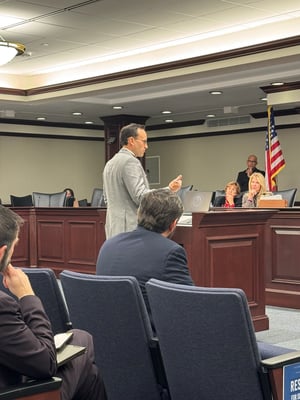
For two consecutive legislative sessions (2025 and 2026), bills have targeted the storm sewer inspection industry. HB239 Standards for Storm Water Systems (Grow) and its companion SB558 (R-Burgess, Zephyrhills) were filed in the 2026 session. SB558 passed its hearing in the Senate Environment and Natural Resources (EN) Committee. However, as of February 6, HB239 has not been scheduled to the House Intergovernmental Affairs Subcommittee nor has SB558 been scheduled to the Community Affairs Committee. FCPA testified in the Senate EN Committee in opposition to SB558 as currently written, as did the National Utility Contractors Association of Florida (NUCA of FL), the Florida Stormwater Association (FSA), and the Florida Association of Counties. One legislative advocate did file a record in support of the bill on behalf of a pipe inspection and rehabilitation company.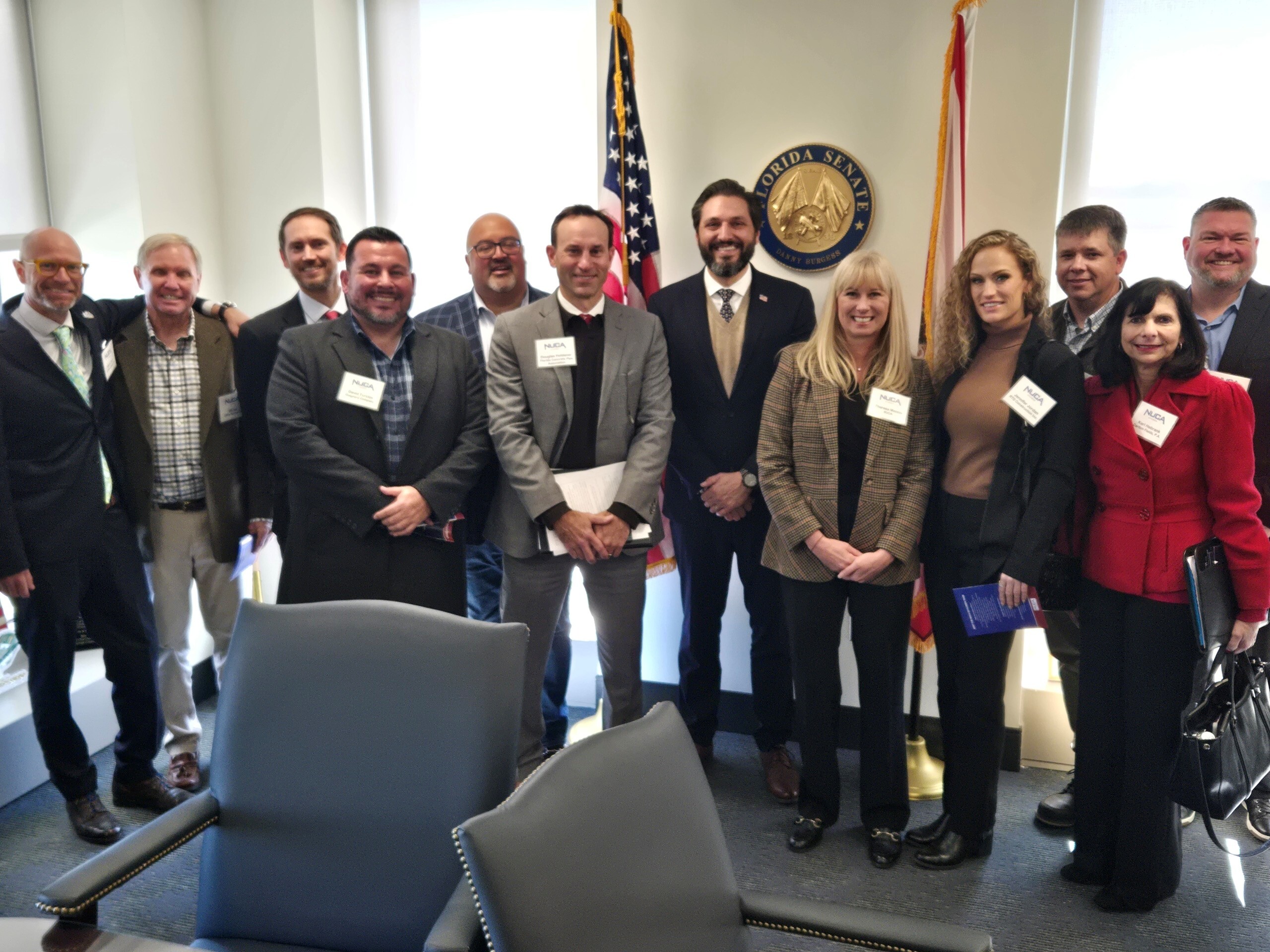
Image 1: FCPA Director Doug Holdener and a NUCA of Florida delegation meet with Senator Danny Burgess, the sponsor of SB558, on January 27, 2026.
SB558 and HB239 mandate that all newly-installed storm water systems in Florida’s cities and counties, including public residential subdivisions, must comply with the FDOT “Pipe Culverts” and “Pipe Liner” standards for installation. The bills also require final inspections to be performed by a third-party general contractor (SB558) or licensed engineering firm that does not have a controlling interest in the installation company. As written, the bill would increase the costs of installing storm sewers and greatly delay the inspection process on local roadway and subdivision projects. FCPA has the following concerns with the bills:
-
The enforcement of FDOT installation standards for local capital and subdivision projects would greatly increase costs and extend construction duration. FDOT construction requirements, and associated oversight and soils testing, are not necessarily appropriate for many local and subdivision projects. Further, this would supersede local engineering decision-making authority and standards.
-
Both bills require a dual certification for the 3rd party inspection entity. Per the bills, the inspection technician must have the NASSCO PACP certification and be employed by a licensed engineering firm. Typically, engineering firms do not conduct, operate, nor possess pipe inspection equipment. Rather the Engineer of Record reviews the inspection report product and certifies the work for the agency or owner. There are not enough personnel in Florida to meet the bills’ dual certification requirements commensurate with demand. A review of NASSCO's certified professionals directory indicates less than thirty people in Florida that meet both criteria.
-
SB558 was amended to alternatively allow a 3rd party “general contractor” to conduct the inspections. However, the general contractor license encompasses a wide range of construction, whereas storm sewer construction is a specialized practice that is performed by licensed underground utility and excavator contractors. We should only expect storm sewer construction, inspection, and engineering evaluation from experienced and specially qualified entities.
-
Reference to “pipe liners” is not appropriate for a new-construction bill. Liners are generally for rehabilitation of older, deteriorating systems. By referencing liners, the bill could force all inspection issues – no matter how minor – to use a liner repair at significant risk and expense to the contractor, agency, or subdivision owner.
-
Specific equipment (means & methods), such as CCTV or fisheye lenses, should not be cited in the bills. If the bill is to cite equipment, it should also cite laser profiling, which is required by FDOT and critical for inspecting plastic pipes.
While there is concern over the bills as written, the FCPA supports the practice of inspecting newly installed storm pipes based on the FDOT pipe inspection standard, whether it is performed by the contractor or a third-party inspection party, and that pipe inspection reports are reviewed and certified by licensed professional engineers.
COMMENTS